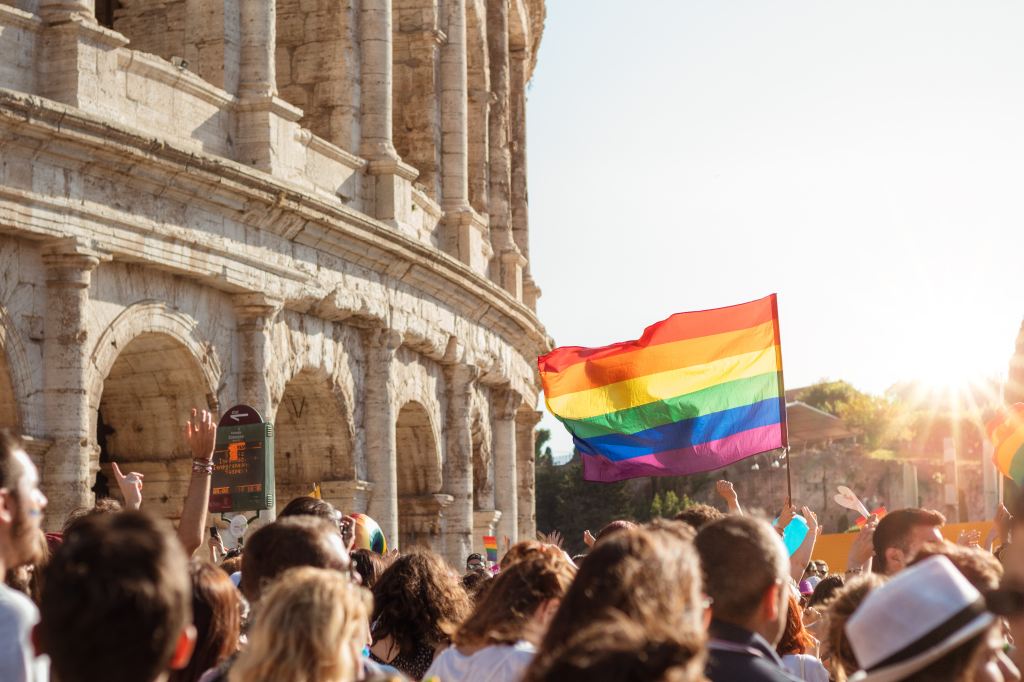
Mutual self-other consideration serves as a guiding principle for respectful, ethical deliberation. This idea can also be applied to our thinking about the relationships between political entities, such as the state and civil society or firms and workers. Historically, conceptions of the universal political subject usually privileged one side over the other, assuming that power and rights were reserved for e.g. enfranchised, property-owning, White, male, able-bodied individuals, typically within a heterosexual family structure. This lack of recognition for others has led to historical conflicts, ultimately undermining cooperation between groups and limiting the full potential of the broader collective.
By embracing the intrinsic dignity of every individual and recognizing the multiplicity of subject positions, we can create a society that celebrates differences as unique strengths that contribute to the community’s well-being. The richness of diverse experiences and talents is essential for the flourishing of individuals and society, fostering a concept of differentiated universality. In doing so, political communities become more resilient, adaptable, and better equipped to address the pressing challenges of the modern world.
Differentiated Universality
The concept of differentiated universality recognizes that while people are equal in dignity, they are also distinct in their experiences, capacities, and identities. Whether through gender, race, or other identity markers, individuals deserve recognition and the right to see themselves reflected in societal norms and institutions.
State and Civic Society
Today, democracy remains incomplete, even in countries like the United States. Genuine self-governance requires citizens to have a legitimate ability to influence critical historical decisions. For this to happen, there must be a commitment to human development, starting with access to education at the post-secondary level, without burdening students with debt.
Civic republicanism stresses the importance of active participation in the political process. Citizens are not just passive recipients of rights but must actively engage in self-governance and contribute to the common good. Civic virtue-the willingness to put the common interest above private interests-is seen as essential to sustaining a free and fair society.
In the specific context of challenging authoritarian and oppressive regimes around the world, civil resistance has been shown to be an effective political tool. Erica Chenoweth’s research on strategic and nonviolent mass movements to enact political change demonstrates a much higher success rate for resistance campaigns in comparison to violent insurgencies. This is based on the its inclusion of broad-based participation, the way it leads to defections from key pillars of support of those in power, and the sustainability of its tactics.
Key tactics these movements have successfully used when the situation calls for it include general strikes, withdrawal of cooperation, demonstrations, rallies, petitions, vigils and sit-ins, and blockades. These methods have been successfully applied in resistance movements such as the Indian Independence Movement led by Mahatma Gandhi and the US civil rights movement led by Dr. Martin Luther King Jr.
Economy
Three values that drive a flourishing economy include efficient allocation, fair governance of firms and the availability of meaningful work. Participatory socialism helps to harmonize the interests of the property-owners and workers by honoring these criteria and often integrating the two.
Allocation
Markets are deeply embedded in human societies. Markets have existed in various forms—barter systems, local exchanges, and communal trade. They have likely persisted because they are efficient information allocation mechanisms that can’t be replaced by centralized planning. It’s likely that even in post-capitalist economies, we would continue to rely on this form of allocation even if monetary systems become more advanced due to technology.
However, this form of exchange primarily applies to consumer goods. There are moral limits to markets and dignity becomes a central concern when a certain sector affects people’s fundamental well-being, equality, and ability to lead a full life. In industries such as healthcare, education, and public transportation, society tends to benefit when everyone has universal access. Even large public infrastructure investments can often benefit from democratic planning.
Private wealth can also be a justified institution when it is earned through honest means such as value creation. However, wealth must be used productively. The key idea is that the power of individuals and groups is commensurate with their responsibilities. There is a reciprocal relationship between the way we pay taxes to compensate the use of public infrastructure and hold the government accountable for the responsible use of public funds.
Governance
A key tension between private stakeholders and workers is that decisions are often made with the firm’s profit in mind rather than the wellbeing of both stakeholders and workers. Following Thomas Piketty, one way to measure this inequality is to compare the rate of return on capital to the economic growth of the economy. Different policy levers can be pulled to get these into alignment to prevent the concentration of wealth but the focus should be on distribution via fair compensation rather than post-hoc redistribution.
However, even if this ratio is stabilized to parity, there is still a history of unjust wealth concentration to contend with. Some programs that may rectify this include reparations, land reforms and worker restitutions. These reparative programs are directly linked to alleviating the historical impact of slavery, dispossession and worker exploitation.
Extending political democracy into the economic sphere is crucial, with worker ownership as the basic mechanism. Piketty proposes that employees could collectively hold a substantial percentage of ownership in their firms, typically suggested around 25-50%. This model also emphasizes distributing a share of profits to workers, which supplements wages and more equitably distributes the returns of a company’s success.
Democratization of firms also allows for workers to capture the gains that follow from increasing automation driven by advances in machine intelligence. Rather than workers losing their jobs because the role has been made obsolete by software or robots, the remaining necessary human labor can be fairly distributed and also allow people to work at higher levels of abstraction.
Purpose in Work
The need for purpose is related to the way that workers can make a personally meaningful contribution to society. In other words, the work is aligned with their personal values. This can be achieved by making firms deliberately developmental where organizations prioritize personal growth, open communication, coaching, and the alignment of personal goals with organizational goals.
Gender Equality and Sexual Autonomy
Despite some progress, the persistence traditional gender roles have limited individuals’ capacity to self-actualize. The idea that men must be heads of households or women must play nurturing roles constrains both genders. A more equal society based on feminist values allows individuals to transcend prescribed roles and negotiate relationships based on mutual respect, shared responsibilities, and personal autonomy.
This extends to sexual autonomy, where all adults should have the freedom to express their desires and identities within a framework of consent and respect. New masculinities, femininities and other gender identities, unified by their balance of assertiveness with emotional sensitivity open up possibilities for more fulfilling and equitable relationships.
Racial Justice and Equality
Modern science tells us that the concept of race is based on superficial phenotypic differences between groups, yet these differences have been overdetermined with meaning owing to the ideological legacy of slavery, dispossession and colonization. Within a cosmopolitan and multicultural society, all “races” must be treated with dignity, and institutions must be reformed to provide equitable opportunities and ensure fair representation at every level.
Philosophers have even argued for the abolition of racial categories because it is inherently tied to oppression and exclusion. While it is a lived experience that can help with solidarity in the struggle for justice, these categories may ultimately be transcended to the extent that they are no longer operative.
In criminal justice, policing must be redefined to focus on community safety and protection rather than punishment. Further, contemporary data have shown that mass incarceration doesn’t create safety with recidivism at high rates and disproportionate impacts on people of color. Through restorative justice, institutions must promote community repair and rehabilitation, creating a system that protects dignity and the possibility of redemption rather than perpetuating harm.
Differences in Ability
Differences in ability should be viewed as ethically neutral, recognizing that all individuals have dynamic capacities shaped by their environments. Social norms and welfare programs must ensure accessibility and inclusivity, welcoming a broad spectrum of abilities as potential contributions to society.
Environmental Responsibility
The environment is neither a resource for unlimited extraction nor an untouchable sanctuary. By maintaining a modest attitude toward nature’s complexity, we can make informed decisions that preserve ecosystems while responsibly managing resources. Humans are especially responsible for treating animals under our care humanely, thereby also fostering more sustainable agricultural practices.
Political Agency and the Call to Action
Creating meaningful change in society requires both individual and collective efforts. While transformation won’t happen overnight, complacency is not an option. At critical historical moments, it becomes essential for citizens to act and influence the course of history for the better, ensuring that future generations inherit a society built on justice, mutual consideration, and respect for all.
At the heart of this discussion is recognizing intrinsic human dignity and the need for a society fostering cooperation and mutual respect. Whether addressing economic inequality, gender roles, racial justice, or environmental stewardship, the key to a flourishing political community is embracing diversity while ensuring universal rights and responsibilities. A differentiated universality—a framework that celebrates our differences while upholding the equal dignity of all—offers a path forward. By promoting civic participation, ensuring fair economic practices, and valuing personal autonomy in all areas of life, we can build a more just, resilient, and compassionate society.
Further Reading
1. You’re More Powerful Than You Think: A Citizen’s Guide to Making Change Happen by Eric Liu. Liu argues that ordinary citizens have far more political power than they realize and provides practical tools to harness that power for civic engagement. The book outlines strategies for individuals to mobilize, organize, and influence change, offering a hopeful vision for how civic engagement can drive progress in democracy.
2. Why Civil Resistance Works: The Strategic Logic of Nonviolent Conflict by Erica Chenoweth and Maria J. Stephan. This book demonstrates the effectiveness of nonviolent civil resistance in achieving political and social change. Using historical data from over 100 years of resistance movements, the authors show that nonviolent campaigns are more successful than violent ones, emphasizing the power of collective action in bringing about lasting democratic reforms.
3. Time for Socialism: Dispatches from a World on Fire, 2016-2021 by Thomas Piketty. In this collection of essays, Piketty explores the crises of rising inequality, climate change, and political upheaval, advocating for a new model of socialism that centers around wealth redistribution, social justice, and the democratization of economic power. Piketty’s work emphasizes the necessity of rethinking economic systems to uphold universal dignity.
4. An Everyone Culture: Becoming a Deliberately Developmental Organization by Robert Kegan and Lisa Laskow Lahey. Kegan and Lahey explore how organizations can foster personal growth and development within the workplace. This book highlights the concept of a deliberately developmental organization (DDO), where employees are encouraged to continuously grow and transform, linking the idea of individual contribution to organizational success and well-being.
5. We Should All Be Feminists by Chimamanda Ngozi Adichie. Based on her TED Talk, Adichie presents a compelling argument for why feminism is essential for achieving universal gender equality. She explores how cultural norms and gender roles restrict individual potential and emphasizes the universal right to dignity and opportunity, regardless of gender.
6. Equal Partners: Improving Gender Equality at Home by Kate Mangino. Mangino examines the unequal distribution of domestic labor and its implications for gender equality. She argues for a model of equal partnership in household responsibilities, showing how gender equality in private life is integral to achieving broader social justice.
7. Gender Explained: A New Understanding of Identity in a Gender Creative World by Diane Ehrensaft and Michelle Jurkiewicz. This aims to demystify contemporary concepts of gender, offering clear explanations and addressing common misconceptions. It explores the fluidity of gender, the experiences of gender-diverse individuals, and the importance of gender-affirming care. The authors provide practical advice for parents, educators, and healthcare professionals on supporting gender-expansive youth, emphasizing compassion and understanding.
8. The Sexual Spectrum: Exploring Human Diversity by Olive Skene Johnson. Johnson explores the wide range of human sexual diversity, emphasizing that human sexuality does not fit into rigid categories. The book argues for the acceptance of diverse sexual identities as an expression of universal human experience, promoting inclusivity and understanding across society.
9. Racism, Not Race: Answers to Frequently Asked Questions by Joseph Graves and Alan H. Goodman. This book debunks the concept of biological race and shows that race, as it is socially constructed, is the basis of inequality, not inherent differences among people. Graves and Goodman provide a scientific and social critique of race, arguing for a society that recognizes the equality of all humans regardless of racial categorizations.
10. We Keep Us Safe: Building Secure, Just, and Inclusive Communities by Zach Norris. Norris advocates for a reimagined model of public safety based on community care and solidarity, rather than fear and punishment. The book calls for justice systems that respect the dignity of all people and prioritizes collective safety through social justice, reforming systems that criminalize marginalized groups.
11. Braiding Sweetgrass: Indigenous Wisdom, Scientific Knowledge, and the Teachings of Plants by Robin Wall Kimmerer. Kimmerer, a botanist and member of the Citizen Potawatomi Nation, weaves together Indigenous wisdom and scientific knowledge to explore humanity’s relationship with nature. The book advocates for a respectful and reciprocal relationship with the environment, underlining the idea that the dignity of all living beings, human and non-human, is interconnected.
12. The Rightful Place of Science: Climate Pragmatism by Ted Nordhaus, Michael Shellenberger, and Jason Lloyd. This book addresses the urgent need for pragmatic solutions to climate change. The authors argue for policies that balance economic development with environmental stewardship, emphasizing the universal responsibility to protect future generations by addressing climate risks.
13. Disability Visibility: First-Person Stories from the Twenty-First Century edited by Alice Wong. This anthology features essays by disabled individuals sharing their lived experiences. The book challenges societal perceptions of disability and calls for the recognition of disabled individuals’ full dignity, advocating for an inclusive society where all people have equal opportunities and respect.
14. What We Don’t Talk About When We Talk About Fat by Aubrey Gordon. Gordon critiques society’s obsession with thinness and the ways fatphobia denies the dignity and humanity of people with larger bodies. The book argues for a shift in discourse towards accepting all body types and promoting health and well-being without stigmatizing people based on weight.
15. The End of Bias: A Beginning by Jessica Nordell. Nordell explores how implicit bias operates in our society and how it perpetuates inequality. She offers strategies for individuals and institutions to confront and reduce bias, making the case that addressing bias is key to ensuring the universal dignity of all people, regardless of their identity or background.
Credits
This post was edited with the help of Grammarly and GPT-4o to ensure clarity and grammatical accuracy. The featured photo is by Luis Cortés on Unsplash.
 Feeling Momentum
Leave a comment